
Every real estate investor starts with a similar dream: financial freedom, passive income, and a legacy of tangible wealth. For many, that journey begins with a single property—perhaps a local single-family home or a duplex. You handle the minor repairs, screen the tenants, and manage the books yourself. But there comes a point in every successful investor’s career where the limits of time and personal energy create a hard ceiling. You realize that you cannot scale your wealth simply by repeating the single-family formula indefinitely. Fully embracing this evolution requires a willingness to abandon the comfort of hands-on control in favor of building scalable business networks.
Scaling a real estate portfolio requires a total shift in your operational strategy, financial structuring, and professional network. The systems, habits, and vendors that served you well when managing three properties will completely fracture when you attempt to manage thirty or three hundred. True expansion is not just about acquiring more roofs; it is about transitioning from an active landlord to a real estate executive. It demands that you stop working in your business and start working on your business. This comprehensive guide outlines the exact phases, logistical shifts, and strategic partnerships required to scale your investments intelligently while mitigating the risks that destroy growing portfolios.
Moving from Single-Family to Multifamily Commercial Assets
Transitioning from single-family homes to multifamily commercial assets is the fastest way to achieve true economies of scale. When you own ten single-family homes, a single vacancy represents a ten percent hit to your monthly revenue, and you are responsible for ten separate roofs, foundations, and HVAC systems scattered across a city. Conversely, a ten-unit apartment building consolidates your risk, centralizes your maintenance, and introduces the powerful concept of forced appreciation based on Net Operating Income rather than unpredictable neighborhood market comparables.
Focus on Forced Appreciation and Economies of Scale
Commercial real estate value is driven entirely by math. Because commercial properties are valued based on the income they generate, every single dollar you add to your bottom line exponentially increases the property’s value.
-
Identify under-managed buildings where rents are trailing the market average by fifteen to twenty percent due to poor ownership or deferred maintenance.
-
Transition to commercial asset valuation models where your property value is determined by dividing your Net Operating Income by the market capitalization rate.
-
Shift away from residential mortgages and utilize commercial debt, which evaluates the asset’s cash flow history and debt-service coverage ratio over your personal debt-to-income limits.
Streamlining Waste and High-Density Utility Systems
As you step into the world of larger apartment complexes, operational expenses can quickly spiral out of control if you do not actively manage utility and maintenance logistics. High-density housing creates an enormous amount of daily waste, which can lead to escalating municipal fines, excessive hauling fees, and pest issues if handled improperly.
Savvy investors look for structural ways to permanently lower these recurring operating costs. One of the most effective strategies for a mid-to-large sized residential complex is to optimize your waste management infrastructure. Installing an apartment building compactor allows management to compress loose trash at a high ratio, significantly reducing the frequency of scheduled waste pickups. This single operational upgrade can cut monthly trash hauling bills by forty to sixty percent, immediately boosting your bottom line and increasing the overall valuation of the asset.
Mitigating Structural and Capital Expenditure Risks
While commercial properties offer incredible scale, they also introduce massive capital expenditure items that can completely wipe out your cash reserves if they are not thoroughly vetted during the due diligence process. A single overlooked systemic failure can turn a profitable acquisition into a financial disaster.
The roof is often the most expensive component of a commercial structure, requiring professional scrutiny before any contract is finalized. You must partner with a qualified provider of commercial roofing to conduct core testing, inspect the structural decking, and evaluate the remaining lifespan of the membrane system. If the inspection reveals underlying damage or an aged system, you can leverage these findings during escrow to negotiate a substantial credit from the seller or force a price reduction, ensuring you are not stuck with an unexpected six-figure repair immediately after taking ownership.
Ground-Up Development and Raw Land Acquisition
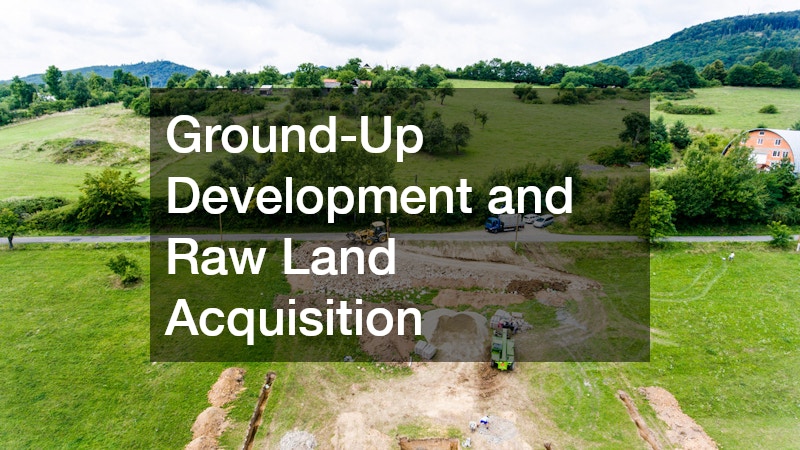
For investors looking to achieve maximum equity growth and build customized, modern portfolios, ground-up development represents the ultimate scaling strategy. Building from scratch allows you to bypass the hidden defects of older buildings and create assets tailored perfectly to current market demands. However, raw land development requires a deep understanding of civil engineering, local governance, and site logistics.
Navigating Zoning, Boundary Lines, and Feasibility Studies
Before a single shovel touches the dirt, you must confirm that your vision for the land aligns perfectly with legal realities and municipal restrictions. Never assume that a vacant parcel can be developed for your intended use simply because neighboring properties look similar.
-
Conduct a thorough zoning analysis to verify density allowances, maximum height restrictions, parking ratios, and environmental setbacks.
-
Check for historical deed restrictions or hidden utility easements that could severely limit the buildable footprint of the parcel.
-
Hire licensed land surveyors early in your feasibility period to establish exact property lines, map topographic changes, and create detailed boundary plats that protect you against future encroachment disputes with adjacent landowners.
Executing Site Preparation and Mastering Earthwork Logistics
Once your legal due diligence is complete and your building plans are approved, the focus shifts to the physical reality of the terrain. The initial phase of site preparation sets the stage for the entire construction lifecycle, and mistakes made here will haunt your foundation and structural framing later on.
The first step is transforming the raw acreage into a workable canvas. You will need to contract comprehensive lot clearing services to efficiently remove trees, brush, stumps, and large boulders from the planned building footprint. Immediately following the clearing process, you must invest heavily in precision land grading to shape the topography of the dirt. Proper grading ensures that rainwater is channeled completely away from future foundations, prevents severe soil erosion, and establishes the level, stable pads required for structural concrete pours.
Mastering Construction Logistics and Project Delivery
Whether you are executing a major value-add renovation on a newly acquired apartment complex or building a commercial strip center from the ground up, the construction phase is where fortunes are either made or lost. Managing supply chains, timelines, and labor forces requires institutional-grade systems and strict accountability.
Controlling Timelines and Supply Chain Vulnerabilities
Time is literally money during a construction project. Every week a project is delayed results in unrecoverable holding costs, including loan interest, property taxes, insurance, and missed rental income. Protecting your project requires a hyper-organized approach to material procurement.
-
Build a minimum fifteen percent financial contingency into your construction budget to absorb unexpected material price spikes.
-
Order long-lead items, such as windows, electrical panels, and HVAC units, months before they are scheduled for installation to prevent labor bottlenecks.
-
Align with a reliable supplier for building material delivery to ensure that lumber, concrete blocks, drywall, and roofing materials arrive at the job site in perfectly timed phases, keeping your sub-contractors active without overcrowding the site storage areas.
Shifting from Landlord to Executive Oversight
The biggest mistake a scaling investor can make is trying to act as the general contractor on large-scale construction sites while simultaneously hunting for new investment deals. Your time is far too valuable to be spent managing daily sub-contractor disputes or tracking down missing tool shipments.
As your projects expand in size and complexity, you must delegate the daily operational burden to professionals who live and breathe job site logistics. Utilizing dedicated construction management services allows you to maintain high-level executive oversight while an experienced team handles scheduling, quality control, safety compliance, and change orders. This layer of professional management ensures that your projects are delivered on time and up to building codes, freeing you up to focus on capital raising and portfolio-level acquisitions.
Long-Term Asset Preservation and Curb Appeal
Once an asset is built or stabilized, the scaling journey shifts from creation to preservation. The long-term value of your portfolio relies heavily on your ability to maintain high tenant retention rates, command premium market rents, and prevent the physical deterioration of your structures.
Maximizing Tenant Retention Through Premium Exterior Maintenance
First impressions dictate the caliber of tenants your properties attract and retain. If the exterior of your property looks neglected, high-quality residential or commercial tenants will look elsewhere, leaving you with lower rental income and higher tenant turnover costs.
-
Walk your properties monthly from the perspective of a prospective tenant, looking closely for overgrown vegetation, dead trees, or messy walkways.
-
Establish a rigid schedule for pressure washing, window cleaning, and exterior painting to keep the buildings looking modern and fresh.
-
Partner with a commercial landscaping service to manage routine lawn mowing, seasonal flower plantings, irrigation system optimization, and tree trimming across your entire portfolio, ensuring your properties consistently project a premium image to the public.
Protecting Physical Infrastructure and Preventing Liability Hazards
Asset preservation goes far deeper than cosmetic aesthetics. Neglected exterior infrastructure can rapidly transform into major safety hazards, opening your investment business up to devastating premises liability lawsuits and expensive emergency repairs.
You must design a proactive maintenance framework that extends to every square foot of your property’s exterior walking and driving surfaces. Committing to routine hardscape maintenance is essential for identifying and resolving sunken concrete slabs, cracked sidewalks, crumbling asphalt, and shifting retaining walls before they cause vehicular damage or trip-and-fall injuries. Furthermore, keeping your walkways, drainage swales, and parking lots properly sealed and leveled prevents water infiltration from compromising the underlying sub-base and destroying your paved infrastructure over time.
Bulletproofing Your Portfolio Structurally and Legally
As your real estate portfolio scales into millions of dollars in asset value, you become a larger target for litigation. A single catastrophic event on one property—such as a structural failure, a severe fire, or a serious injury—has the potential to jeopardize your entire life’s work if your portfolio is not properly isolated and structured.
Restructuring Entities and Securing Institutional Joint Ventures
Scaling past a handful of properties means you must completely abandon the practice of holding real estate in your personal name or within a single, massive LLC. True risk management requires the strategic compartmentalization of your assets.
-
Establish individual subsidiary LLCs for each major commercial asset or small cluster of residential properties to ensure that a legal claim against one property cannot touch the equity of another.
-
Transition to a holding company structure, often based in asset-protection friendly states like Delaware or Wyoming, to centralize your accounting while maintaining strict liability shields.
-
Engage specialized real estate attorneys to draft ironclad corporate operating agreements, structure complex joint venture partnerships, and review your commercial leases to guarantee maximum legal protection and compliance with ever-changing state and federal property laws.
Scaling up your real estate investments is a thrilling and highly rewarding endeavor, but it is not a path that can be navigated using amateur strategies. Moving from single-family houses to large commercial developments, raw land projects, and high-density multifamily complexes requires a profound evolution in how you allocate your time, manage your money, and select your partners. Realizing sustainable growth means matching your financial ambitions with an unyielding commitment to operational excellence and strategic delegation. Investors who fail to adapt to this shift often find their expansion halted by the sheer weight of unmanaged operational details.
By building specialized infrastructure, outsourcing your logistics to expert vendors, and insulating your portfolio through advanced corporate structuring, you remove the operational bottlenecks that limit traditional landlords. Remember that true scale is not measured by how hard you work, but by how effectively your systems and teams perform when you are not in the room. Treat your real estate investments as a true corporate enterprise, protect your capital through meticulous due diligence, and you will build an institutional-grade portfolio that generates substantial wealth for generations to come. Ultimately, the willingness to transform yourself from a hands-on manager into an enterprise leader determines whether your portfolio thrives or succumbs to the pressures of growth.